
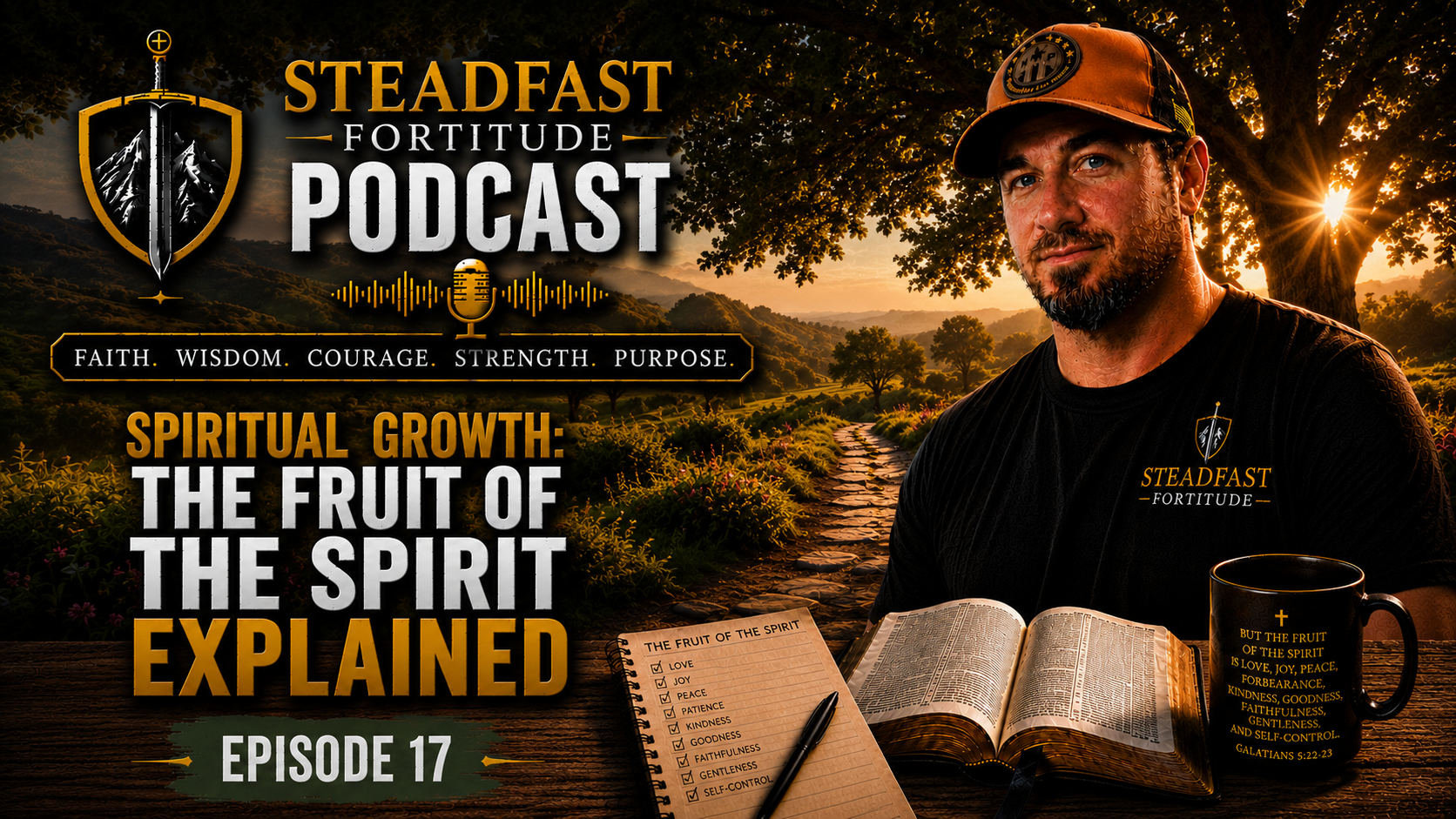
Episode 17: Spiritual Growth – The Fruit of the Spirit Explained
Episode Overview
What evidence should others see when the Holy Spirit is transforming our lives? In Episode 17, Derek explores the fruit of the Spirit described in Galatians 5:22–23 and what each quality looks like in everyday Christian living. This episode examines love, joy, peace, patience, kindness, goodness, faithfulness, gentleness, and self-control while explaining how these characteristics develop as we remain connected to Christ and allow the Holy Spirit to transform us from the inside out.
Listen above, share this episode with someone who may need to hear its message, and follow the Steadfast Fortitude Podcast on your favorite podcast platform so you don’t miss future episodes.
Episode Context
Our faith should eventually become visible in the way we live. If someone observed how we treated people, responded to frustration, handled success, endured disappointment, and made everyday decisions, they should increasingly see evidence that Christ is transforming us.
Scripture calls this evidence the fruit of the Spirit.
Galatians 5:22–23 says, “But the fruit of the Spirit is love, joy, peace, forbearance, kindness, goodness, faithfulness, gentleness and self-control.” (NIV)
Notice that Paul uses the singular word fruit. These aren’t separate spiritual qualities from which we select our favorites. Together, they describe the Christlike character the Holy Spirit increasingly produces within believers.
Love seeks the good of others even when doing so is difficult. Joy reaches deeper than temporary happiness because it rests in God rather than circumstances. Peace provides confidence in God’s presence and sovereignty even when life feels chaotic.
Patience chooses grace when frustration would be easier and learns to trust God’s timing. Kindness puts love into action through compassionate words and thoughtful treatment of others. Goodness reflects integrity—the commitment to do what honors God even when no one is watching.
Faithfulness produces reliability and steadfast commitment to God and others through both easy and difficult seasons. Gentleness isn’t weakness; it is strength exercised with humility and restraint. Finally, self-control enables us to resist sinful desires and increasingly bring our thoughts, words, emotions, habits, and decisions under God’s direction.
Together, these characteristics give us a picture of what spiritual transformation looks like in everyday life.
But how do we develop them?
The answer is found in the name itself. This is the fruit of the Spirit, not the fruit of human effort.
We cannot simply manufacture Christlike character by trying harder. Jesus explains in John 15 that a branch produces fruit by remaining connected to the vine. In the same way, spiritual fruit develops as we abide in Christ and allow the Holy Spirit to work within us.
That doesn’t make us passive. We continue reading God’s Word, praying, surrendering areas of our lives to Him, and choosing obedience when opportunities arise. But lasting transformation ultimately comes from God.
Over time, that transformation begins becoming visible. Situations that once immediately produced anger may increasingly become opportunities for patience. Fear can give way to peace. Selfishness can be replaced with generosity and kindness. Harshness can become gentleness.
These changes rarely happen overnight.
Like physical fruit, spiritual fruit develops gradually. Some seasons may produce obvious growth, while others seem slower. Slow progress doesn’t necessarily mean God isn’t working. Healthy spiritual growth often develops through countless small decisions to remain connected to Christ and follow the Holy Spirit’s leading.
The goal isn’t perfection. It is increasing Christlikeness.
And as the fruit of the Spirit becomes more visible in our lives, it does more than strengthen our personal walk with God. It allows the people around us to see something of the character of Jesus through us.
As you reflect on this episode, consider this question:
Which aspect of the fruit of the Spirit is God inviting me to surrender more fully to His transforming work right now?
Stay rooted in God’s Word. Stand firm in your faith. Live with steadfast fortitude.