

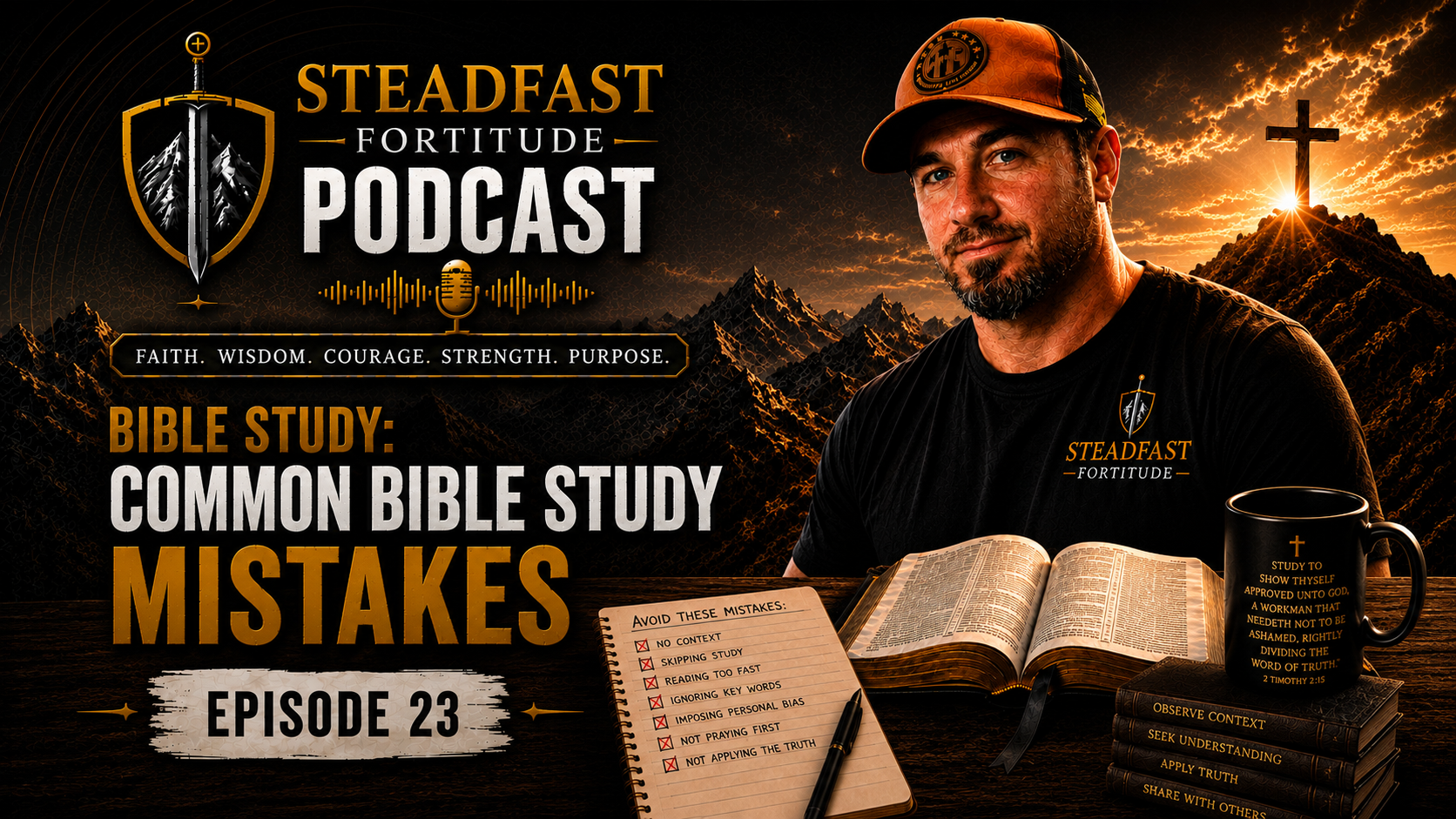
Episode 23: Bible Study – Common Bible Study Mistakes
Episode Overview
What are some of the most common mistakes we make when studying the Bible, and how can we avoid them? Episode 23explores practical ways to approach Scripture with greater accuracy, patience, and humility. This episode examines the dangers of ignoring context, reading our own assumptions into Scripture, rushing through passages, relying too heavily on feelings, neglecting application, studying in isolation, and becoming discouraged when God’s Word is difficult to understand.
Listen above, share this episode with someone who may need to hear its message, and follow the Steadfast Fortitude Podcast on your favorite podcast platform so you don’t miss future episodes.
Episode Context
Every Christian is continually learning how to better understand God’s Word. Whether we’re opening the Bible for the first time or have studied Scripture for decades, none of us approaches it with perfect understanding.
Bible study isn’t about becoming an expert overnight. It’s about faithfully seeking God’s truth with humility, patience, and a willingness to learn.
Proverbs 2:3–5 describes seeking wisdom and understanding as searching for hidden treasure. That picture reminds us that understanding Scripture sometimes requires effort. We must slow down, ask questions, examine what we’re reading, and resist several common mistakes that can distort our interpretation.
One of the most frequent mistakes is ignoring context. Individual verses belong within paragraphs, chapters, books, and ultimately the entire biblical story. Reading what comes before and after a verse and understanding who wrote it, who received it, and why it was written helps us discover its intended meaning.
Another danger is approaching Scripture looking for confirmation of what we already believe. Instead of asking what we want a passage to mean, we should ask, “What was God communicating through the biblical author?” We don’t reshape Scripture to support our opinions. We allow Scripture to reshape us.
It’s also important to remember the Bible’s larger message. Scripture tells one unified story centered on God’s redemptive work through Jesus Christ. Individual passages become clearer when we understand how they fit within that greater story.
Our emotions can also influence how we approach Bible study. Some days Scripture may feel especially powerful or encouraging. Other days may feel ordinary. God’s truth doesn’t become less valuable simply because we don’t experience a strong emotional response. Consistency matters even when our feelings fluctuate.
Rushing can create another obstacle. Completing a reading plan can be beneficial, but finishing chapters shouldn’t become more important than understanding them. Sometimes slowing down to carefully examine a few verses will produce greater insight than quickly reading several chapters.
Most importantly, Bible study should eventually lead to application.
James 1:22 says, “Do not merely listen to the word, and so deceive yourselves. Do what it says.” (NIV) Biblical knowledge isn’t intended merely to increase what we know. God uses His Word to transform how we think, speak, make decisions, treat others, and live.
We should also recognize the value of studying Scripture alongside other believers. Pastors, teachers, Bible studies, and mature Christians can provide valuable insight. At the same time, Acts 17 reminds us of the Bereans, who carefully examined Scripture to verify what they were being taught. We remain personally responsible for testing teaching against God’s Word.
Difficult passages shouldn’t discourage us either. Some portions of Scripture require additional study, historical understanding, or repeated reading. Growth takes time.
Above all, effective Bible study requires humility. Psalm 25:9 says, “He guides the humble in what is right and teaches them his way.” (NIV) No matter how long we’ve studied Scripture, there will always be more to learn about our infinite God.
As you reflect on this episode, consider this question:
When I study Scripture, am I genuinely seeking what God has revealed—or primarily looking for confirmation of what I already believe?
Stay rooted in God’s Word. Stand firm in your faith. Live with steadfast fortitude.


