

Episode 3: Faith Foundations – Understanding Salvation
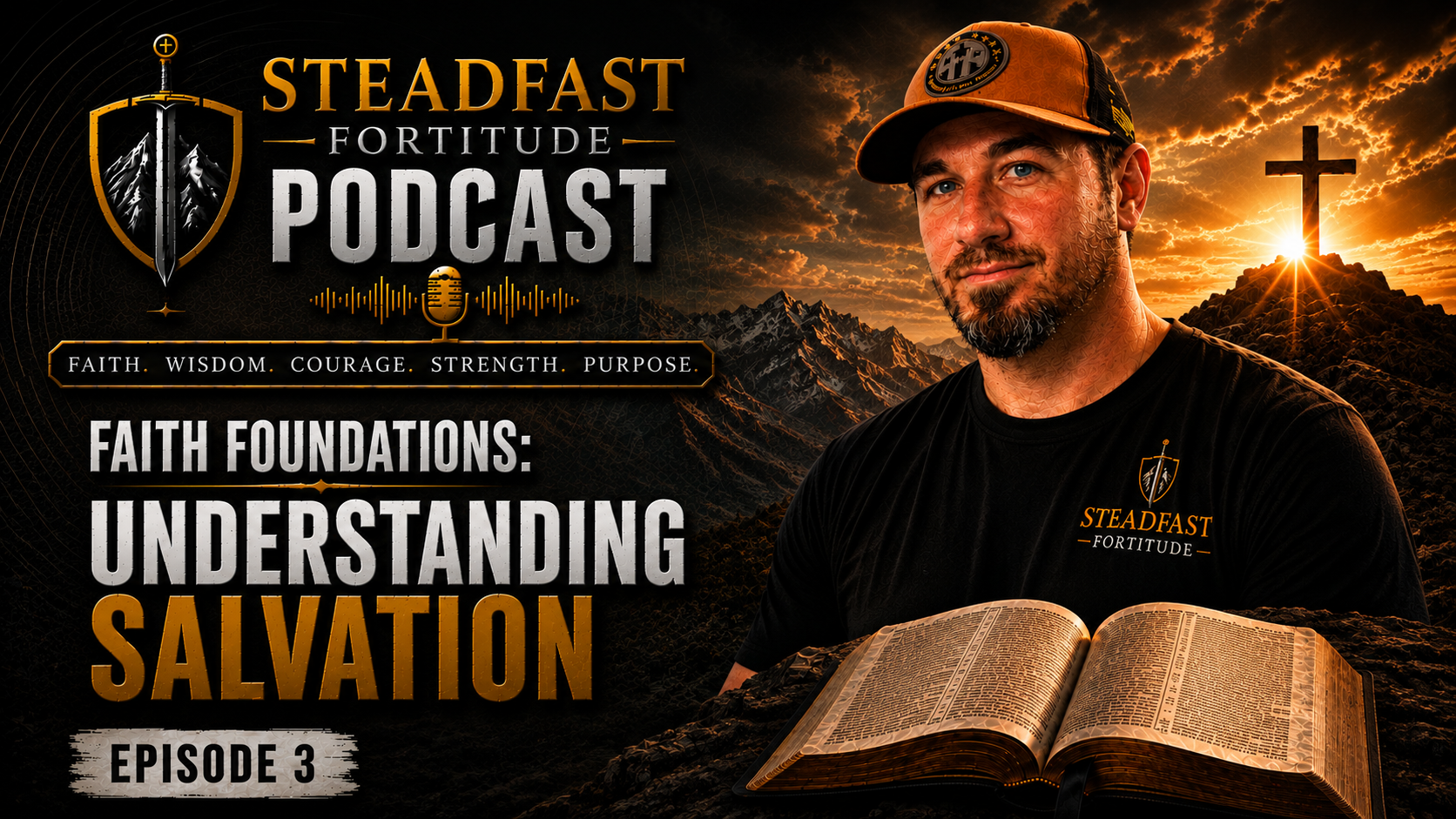
Episode Overview
What does it actually mean to be saved? This explores the biblical meaning of salvation and God’s incredible gift of grace through Jesus Christ. This episode looks at what we’re saved from, why salvation cannot be earned, the importance of repentance and faith, and how receiving Christ begins a new life that reaches far beyond eternity.
Listen above, share this episode with someone who may need to hear its message, and follow the Steadfast Fortitude Podcast on your favorite podcast platform so you don’t miss future episodes.
Episode Context
Salvation is one of the most important truths in Christianity, yet the word can sometimes become so familiar that we overlook what it actually means. When Christians talk about being “saved,” Scripture is describing something extraordinary: God rescuing us from the penalty and power of sin, reconciling us to Himself, and giving us eternal life through Jesus Christ.
The foundation of salvation is not human effort. It is God’s grace.
Ephesians 2:8–9 says, “For it is by grace you have been saved, through faith—and this is not from yourselves, it is the gift of God—not by works, so that no one can boast.” (NIV)
This challenges one of the most common misconceptions about Christianity—the idea that we must somehow become good enough for God. We may be tempted to measure ourselves by our good deeds, religious activity, or comparison with others. But Scripture teaches that none of us can overcome the problem of sin through our own efforts.
That is why Jesus came.
Through His perfect life, sacrificial death on the cross, and resurrection from the dead, Jesus accomplished what we could never accomplish ourselves. Salvation is therefore not a reward for good behavior. It is a gift made possible by Christ.
God calls us to respond to that gift through repentance and faith.
Repentance is more than feeling regret or guilt about our sins. It involves a genuine change of heart that turns away from sin and toward God. Faith means placing our trust completely in Jesus—not our accomplishments, religious traditions, or ability to make ourselves righteous.
Romans 10:9 tells us, “If you declare with your mouth, ‘Jesus is Lord,’ and believe in your heart that God raised him from the dead, you will be saved.” (NIV)
When we place our faith in Christ, our sins are forgiven, we are reconciled to God, welcomed into His family, and given the Holy Spirit. A new life begins.
That doesn’t mean Christians immediately become perfect or never struggle again. Temptation, failure, doubt, and difficult seasons remain part of life. The difference is that we no longer face them alone. God is at work within us, gradually transforming us to become more like Christ.
Salvation also changes more than our eternal destination. It changes how we live today. As our relationship with Christ grows, our desires, priorities, relationships, and actions should increasingly reflect Him. We learn to love more deeply, forgive more freely, serve more faithfully, and seek to honor God with every area of our lives.
Those changes do not earn salvation. They are the fruit of God’s transforming work within us.
Salvation ultimately isn’t about what we can do for God. It is about what God has already done for us through Jesus Christ.
As you reflect on this episode, consider this important question:
Am I trusting in my own efforts, or am I trusting completely in Jesus?
Stay rooted in God’s Word. Stand firm in your faith. Live with steadfast fortitude.