

Episode 37: Christian Character – Self-Control According to Scripture
Episode Overview
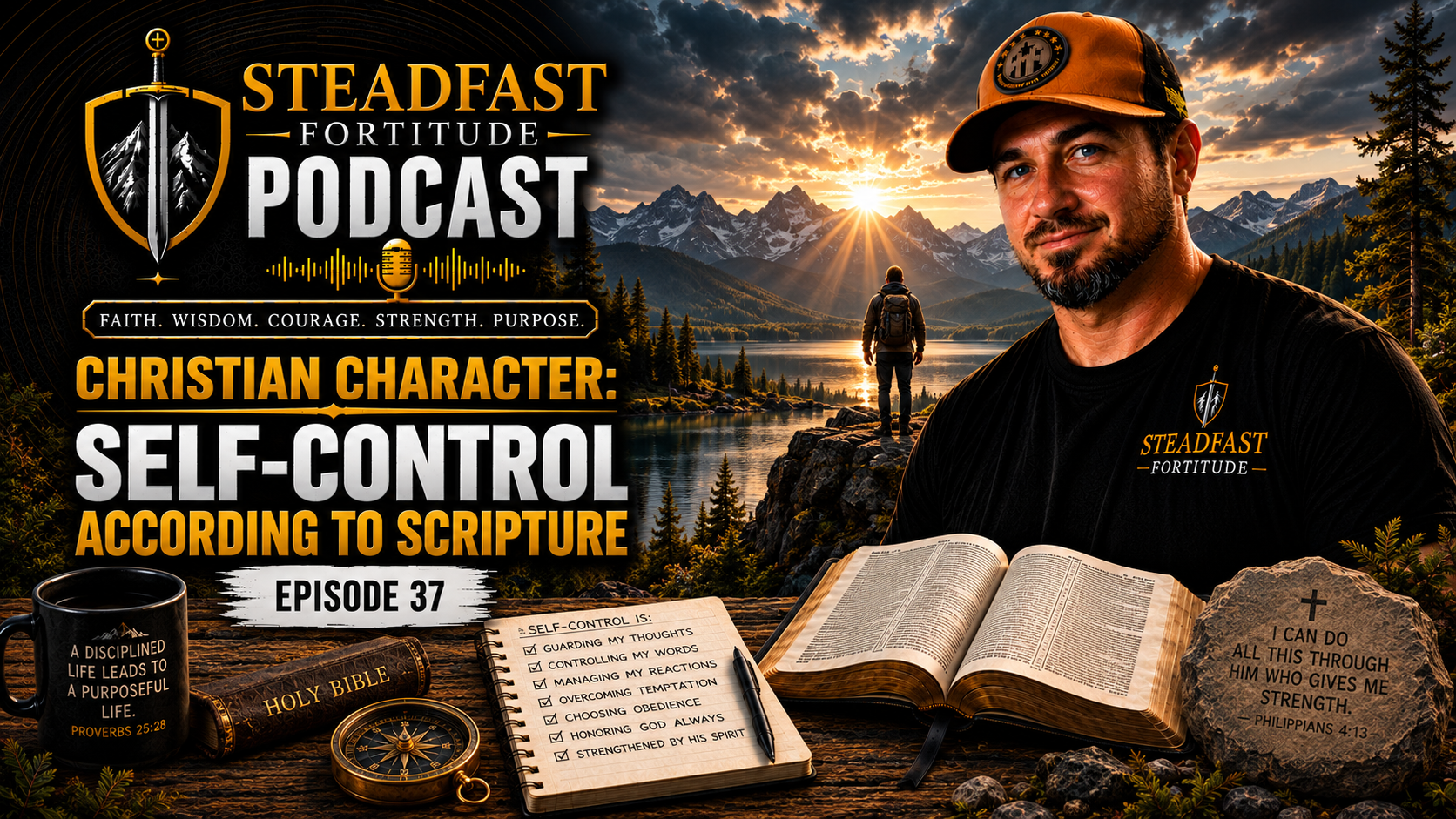
What does biblical self-control look like in a world filled with temptation, distractions, and opportunities to react impulsively? Episode 37 explores self-control as a fruit of the Holy Spirit, rather than simply an exercise in human willpower. This episode looks at how self-control influences our words, emotions, thoughts, time, habits, finances, and choices, while examining the examples of Joseph and Jesus. True self-control doesn’t merely restrict us—it protects us and gives us greater freedom to live according to God’s purposes.
Listen above, share this episode with someone who may need to hear its message, and follow the Steadfast Fortitude Podcast on your favorite podcast platform so you don’t miss future episodes.
Episode Context
Every day presents opportunities to choose between immediate impulses and what we know is right. A frustrating comment can tempt us toward anger. An unhealthy desire can promise immediate satisfaction. A distraction can consume time intended for something more meaningful.
In those moments, self-control can determine the direction of our decisions and eventually the development of our character.
Galatians 5:22–23 identifies self-control as part of the fruit of the Spirit. This distinction is important. Biblical self-control isn’t simply about developing enough willpower to control ourselves. It is evidence of the Holy Spirit transforming our desires and strengthening us to increasingly choose what honors God.
Self-control also reaches much further than resisting obvious sinful temptations. It influences how we speak, respond emotionally, spend money, use our time, approach food, consume entertainment, manage our thoughts, and establish habits.
Proverbs 25:28 says, “Like a city whose walls are broken through is a person who lacks self-control.” (NIV) In the ancient world, walls protected cities from attack. Without them, people were left vulnerable.
Self-control provides similar protection in our lives. It isn’t merely restrictive; it is protective.
Joseph demonstrated this when Potiphar’s wife attempted to seduce him. Although he had the opportunity to compromise privately, Joseph chose faithfulness to God over immediate pleasure. His obedience came with a temporary cost, but it protected something far more valuable—his character.
Jesus demonstrated perfect self-control during His temptation in the wilderness. After fasting for forty days, Satan appealed to physical hunger, recognition, and power. Jesus answered temptation with God’s Word rather than allowing temporary desires to override eternal truth.
Scripture can provide that same foundation for us.
Self-control also influences our emotions. Anger, frustration, disappointment, and hurt are real emotions, but they don’t have to dictate our responses. James 1:19 instructs believers to be “quick to listen, slow to speak and slow to become angry.” (NIV)
Learning to pause before responding can prevent a temporary emotion from creating lasting damage.
Our use of time requires similar discipline. Entertainment, social media, recreation, and countless distractions constantly compete for our attention. Rest isn’t wrong, but self-control encourages us to ask whether the way we’re spending our time supports or undermines the person God is calling us to become.
The encouraging truth is that self-control grows through practice. Every time we choose patience over anger, truth over exaggeration, generosity over selfishness, or obedience over impulse, we’re strengthening patterns of Christlike character.
And when we fail, God’s grace allows us to confess, receive forgiveness, learn, and continue growing.
Biblical self-control isn’t ultimately about achieving perfect behavior. It’s about continually surrendering our desires to Christ and depending upon the Holy Spirit to transform us from within.
Actionable Steps for Developing Self-Control
- Identify your weakest area. Determine where impulsive choices most frequently influence your behavior.
- Pause before responding. Create space between an emotion or temptation and your response.
- Use Scripture against temptation. Memorize biblical truth related to the area where you struggle.
- Remove unnecessary temptation. Establish practical boundaries around situations, habits, or environments that repeatedly lead you toward compromise.
- Manage your time intentionally. Decide beforehand how much time you’ll give entertainment, social media, work, rest, and spiritual priorities.
- Practice small acts of discipline. Strengthen self-control through ordinary daily decisions rather than waiting for major tests.
- Depend upon the Holy Spirit. Pray for God’s strength instead of assuming willpower alone will produce lasting transformation.
As you reflect on this episode, consider this question:
What area of my life most needs greater self-control, and what specific boundary or decision can I make today to surrender that area more fully to God?
Stay rooted in God’s Word. Stand firm in your faith. Live with steadfast fortitude.