
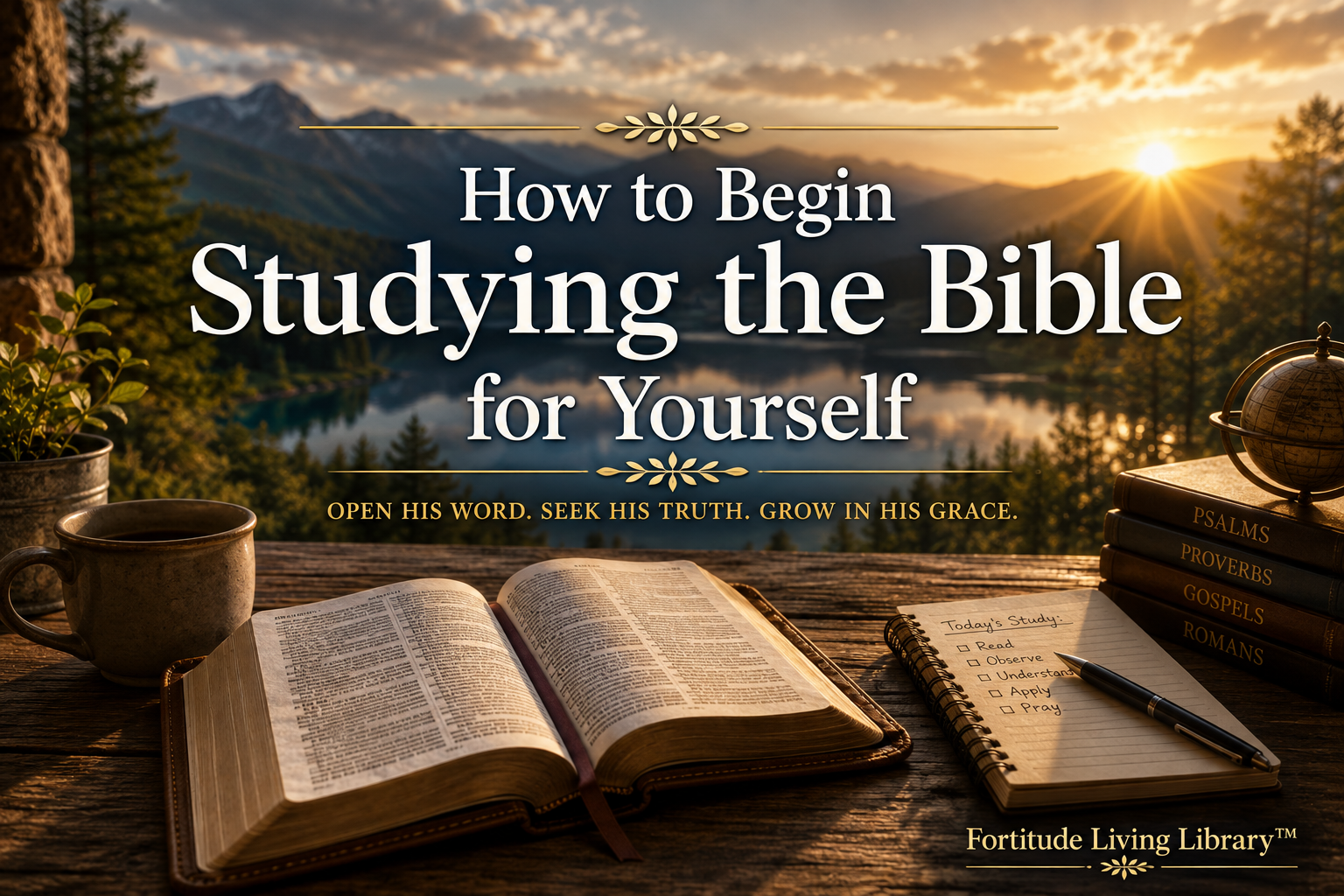
How to Begin Studying the Bible for Yourself
For many Christians, one of the greatest challenges is not believing that the Bible is important—it is knowing how to study it with confidence. You may have opened your Bible with good intentions only to find yourself unsure where to begin, confused by unfamiliar passages, or overwhelmed by the size of the book itself. If that describes your experience, you are not alone. Every mature believer was once a beginner, learning to open God’s Word one page at a time.
The encouraging truth is that Bible study is not reserved for pastors, theologians, or Bible teachers. God has given His Word to all His people because He desires every believer to know Him personally. Through the Holy Spirit, every Christian has the privilege of reading, understanding, and applying Scripture. While we continue growing in knowledge throughout our lives, we never have to wait until we know everything before we begin.
The first step in studying the Bible is remembering its primary purpose. The Bible is not simply a source of information—it is God’s revelation of Himself. While we certainly learn history, doctrine, wisdom, and practical principles, the greatest goal of Bible study is knowing God more deeply. Every passage ultimately reveals something about His character, His purposes, and His plan of redemption through Jesus Christ.
Because of this, Bible study should always begin with prayer. Before opening God’s Word, ask God to give you understanding, humility, and a teachable heart. James 1:5 reminds us that God generously gives wisdom to those who ask. The Holy Spirit, who inspired Scripture, also helps believers understand and apply it. Prayer reminds us that Bible study is not merely an intellectual exercise but a spiritual relationship with the Author of Scripture.
One of the biggest mistakes new Bible students make is trying to read the Bible randomly. Opening to a random page each day often results in confusion because individual verses are removed from their context. Instead, begin by reading complete books of the Bible. The Gospel of John is an excellent starting place because it introduces Jesus Christ clearly and emphasizes belief in Him. From there, books like Philippians, James, Ephesians, or Genesis provide wonderful foundations for continued growth.
Reading slowly is often more beneficial than reading quickly. Our goal is not to finish chapters but to understand what God is communicating. As you read, ask simple questions: What does this passage teach me about God? What does it reveal about humanity? Is there an example to follow, a warning to avoid, a promise to trust, or a command to obey? These questions help move Bible study beyond observation into transformation.
Context is one of the most important principles in understanding Scripture. Every verse belongs within a paragraph, every paragraph belongs within a chapter, every chapter belongs within a book, and every book contributes to the larger story of the Bible. Reading verses within their surrounding context helps us understand what the author intended to communicate rather than assigning our own meaning to the text.
It is also helpful to recognize the different types of literature found in Scripture. Historical narratives tell the story of God’s work through real people and events. Poetry expresses worship, emotion, and wisdom through vivid imagery. Letters provide instruction for Christian living. Prophecy often combines immediate historical messages with future hope. Understanding these genres helps us read each passage appropriately without forcing every section to function in the same way.
Keeping a Bible study journal can greatly enrich your learning. Write down observations, questions, verses that stand out, and ways God speaks to you through His Word. Recording what you learn helps reinforce truth and provides a valuable record of your spiritual growth over time. Months or years later, looking back through your journal often reveals how faithfully God has been teaching and shaping your life.
Reliable study tools can also be helpful, but they should never replace Scripture itself. A study Bible, Bible dictionary, maps, or trusted commentaries can provide valuable background information. However, always begin by reading the biblical text carefully before consulting outside resources. Let God’s Word speak first, then use additional tools to deepen your understanding.
Perhaps the most important step in Bible study is application. Knowledge alone does not produce spiritual maturity. James 1:22 reminds believers to be doers of the Word, not merely hearers. After studying a passage, ask yourself how God wants you to respond. Is there an attitude to change? A relationship to restore? A sin to confess? A promise to trust? A step of obedience to take? Scripture accomplishes its greatest work when it shapes the way we live.
Consistency matters far more than perfection. Many people become discouraged because they miss a day or fall behind a reading plan. Remember that Bible study is about building a lifelong relationship with God, not completing an assignment. It is far better to spend fifteen consistent minutes with God’s Word each day than to study for several hours once a month. Small, faithful habits often produce the greatest long-term growth.
As you continue studying Scripture, your confidence will naturally increase. Passages that once seemed confusing will begin connecting with other parts of the Bible. God’s character will become increasingly clear. Themes will repeat throughout Scripture, strengthening your understanding of His purposes. Most importantly, your relationship with Jesus Christ will deepen as His Word continually transforms your mind and heart.
Studying the Bible for yourself is one of the greatest privileges God has given every believer. You do not need extraordinary education or perfect understanding to begin. You simply need a humble heart, an open Bible, and a willingness to listen to the God who still speaks through His Word today. Every time you open Scripture, you are invited to know Him more, trust Him more fully, and become more like Christ.
Key Takeaways
- Bible study begins with a desire to know God, not simply gain information.
- Reading Scripture in context, praying for understanding, and applying what you learn are essential to healthy Bible study.
- Consistent, faithful time in God’s Word produces lifelong spiritual growth and transformation.
Reflection Questions
- What has been your biggest obstacle to consistently studying the Bible?
- How can you approach Scripture with greater intentionality rather than simply reading out of routine?
- What practical change could you make this week to strengthen your daily time in God’s Word?
Action Steps
- Begin reading through the Gospel of John one chapter each day this week.
- Start a Bible study journal to record observations, questions, and personal applications.
- Before each Bible study, pray specifically for wisdom, understanding, and a heart willing to obey God’s Word.
Journal Prompt
Describe what you hope your relationship with God’s Word will look like one year from today. What habits do you need to begin developing now to help make that vision a reality?
Short Prayer
Heavenly Father, thank You for inviting me to know You through Your Word. Give me a heart that desires Your truth above my own understanding. Teach me to study Scripture faithfully, carefully, and with humility. Open my eyes to understand what You are revealing and give me the courage to obey what You teach. Help me develop consistent habits that draw me closer to You each day. May Your Word renew my mind, strengthen my faith, and transform every area of my life so that I increasingly reflect the character of Jesus Christ. Thank You for the privilege of hearing Your voice through the Scriptures. In Jesus’ name, Amen.
Faith Declaration
I believe God desires to speak to me through His Word. As I faithfully study Scripture, the Holy Spirit is giving me wisdom, strengthening my faith, and transforming my life to become more like Jesus Christ.
Memory Verse
James 1:22 (NIV)
“Do not merely listen to the word, and so deceive yourselves. Do what it says.”