
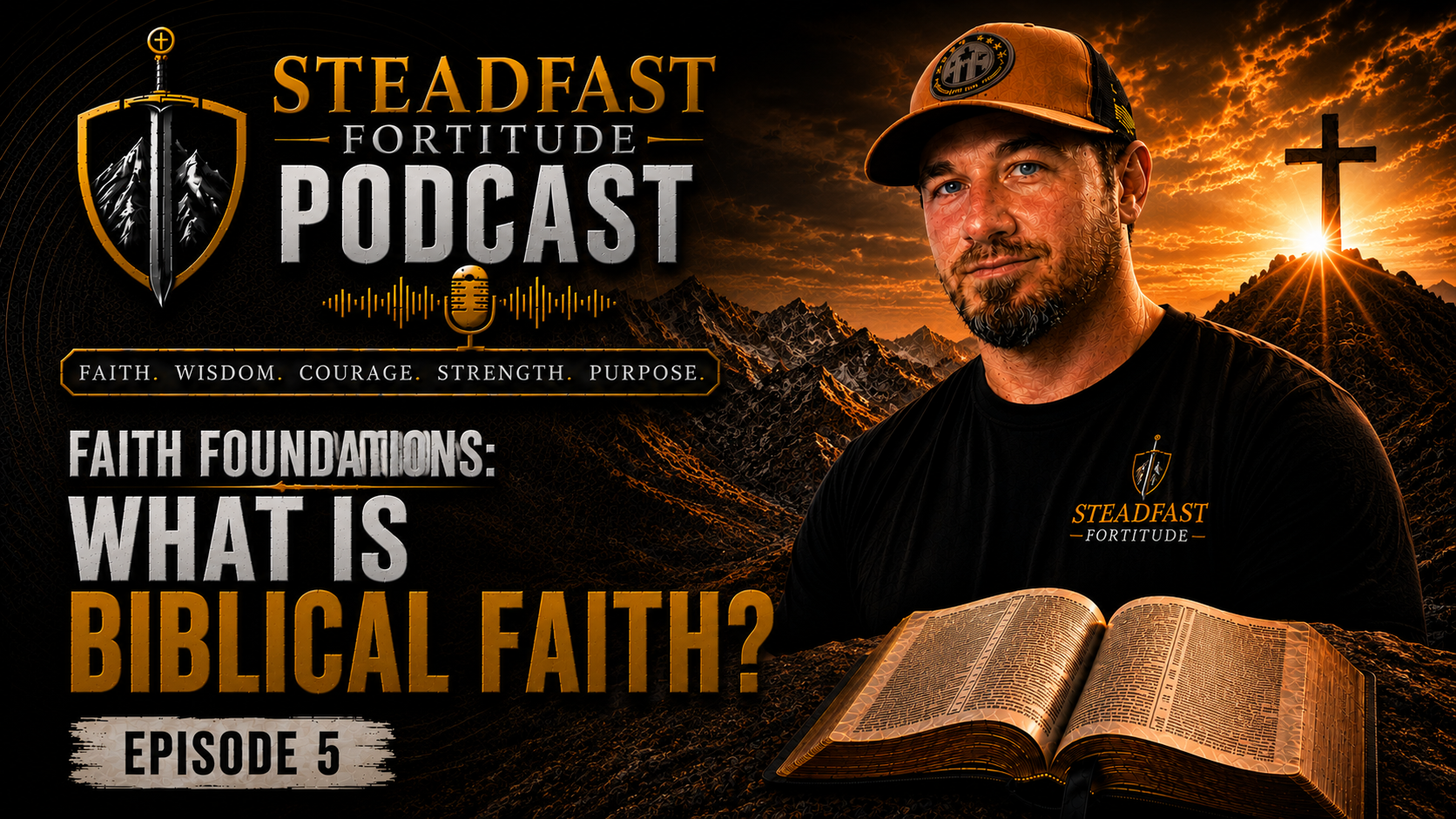
Episode 5: Faith Foundations – What Is Biblical Faith?
Episode Overview
What does it really mean to have faith? This episode explores the difference between biblical faith and simple optimism, positive thinking, or wishful thinking. This episode looks at what Scripture teaches about trusting God’s character and promises, how faith can remain strong even when questions and uncertainty remain, and practical ways we can grow in faith as we walk with Christ.
Listen above, share this episode with someone who may need to hear its message, and follow the Steadfast Fortitude Podcast on your favorite podcast platform so you don’t miss future episodes.
Episode Context
Faith is one of the most familiar words in Christianity, but biblical faith is often misunderstood. We may hear phrases such as “just have faith” and assume faith means believing circumstances will eventually work out the way we want.
Scripture presents something much deeper.
Hebrews 11:1 says, “Now faith is confidence in what we hope for and assurance about what we do not see.” (NIV)
Biblical faith is not wishful thinking, blind optimism, or pretending difficult circumstances don’t exist. It is trusting God because of who He is—even when we cannot see or understand what He is doing.
That distinction is important. Our faith isn’t ultimately built upon knowing what tomorrow holds. It is built upon knowing the character of the God who holds tomorrow.
Throughout Scripture, God reveals Himself as loving, faithful, trustworthy, sovereign, and true to His promises. As we grow in our understanding of His character, we develop greater confidence that He can be trusted even when our circumstances don’t make sense.
Abraham provides a powerful example. God promised that Abraham would become the father of many nations despite circumstances that made the promise appear humanly impossible. Abraham certainly experienced moments of uncertainty along the way, but his life ultimately demonstrated faith because he continued returning to God’s promises.
His story reminds us of an encouraging truth: faith does not mean never experiencing doubt, fear, or questions.
Many faithful people throughout Scripture wrestled with uncertainty. Biblical faith means continuing to trust God in the middle of those questions rather than allowing uncertainty to drive us away from Him.
Jesus also taught that faith as small as a mustard seed can accomplish extraordinary things. The strength of biblical faith isn’t ultimately found in how much confidence we can generate within ourselves. The strength of our faith comes from the One in whom our faith is placed.
So how can our faith grow?
Romans 10:17 tells us, “Consequently, faith comes from hearing the message, and the message is heard through the word about Christ.” (NIV)
Growing faith requires intentionally spending time with God. We strengthen our faith by reading Scripture, praying, remembering God’s past faithfulness, learning His promises, and continuing to walk with Him through both blessings and difficulties.
Every challenge can become an opportunity to trust Him more deeply.
That doesn’t mean faith guarantees an easy life or ensures that everything will happen according to our plans. Jesus never promised His followers a life without hardship. Instead, He promised His presence through whatever we face.
Biblical faith isn’t confidence that everything will go according to our plan. It is confidence that God will remain faithful regardless of what happens.
Sometimes we won’t see the entire path ahead. We may only know the next faithful step God is asking us to take.
As you reflect on this episode, consider this question:
Where is God asking me to trust Him right now, even though I cannot yet see what He is doing?
Stay rooted in God’s Word. Stand firm in your faith. Live with steadfast fortitude.